We offer car jump start services in different areas of New Jersey including Maplewood, New Brunswick, Hudson County, East Orange, Middlesex County, Morris County, Edison, Bergen County, Passaic County, Hoboken, Union County, and Essex County.
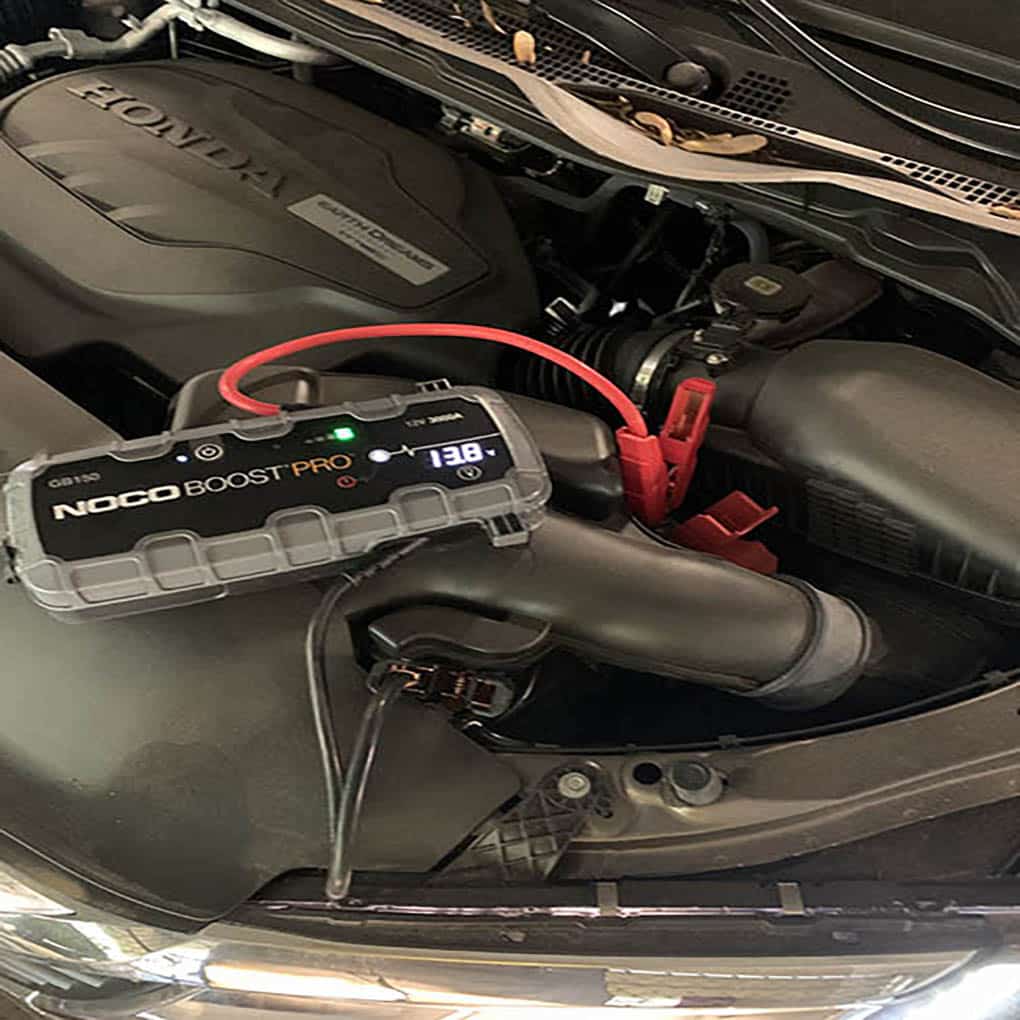
A dead battery doesn’t have to ruin your day. Our licensed technicians arrive at your location — anywhere in New Jersey — and get your vehicle running fast. No towing, no waiting rooms, no hassle.
How our car jump start service works:
Jump start service pricing: Starting at $65. No hidden fees, no trip charges. Same price nights, weekends, and holidays.
If your battery is more than 3 years old or has failed a load test, our technicians carry a full inventory of OEM-grade batteries for same-visit replacement.
Some areas we regularly service:
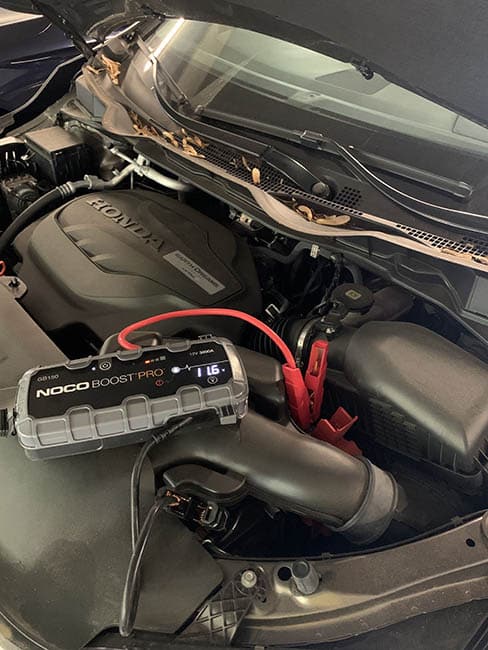
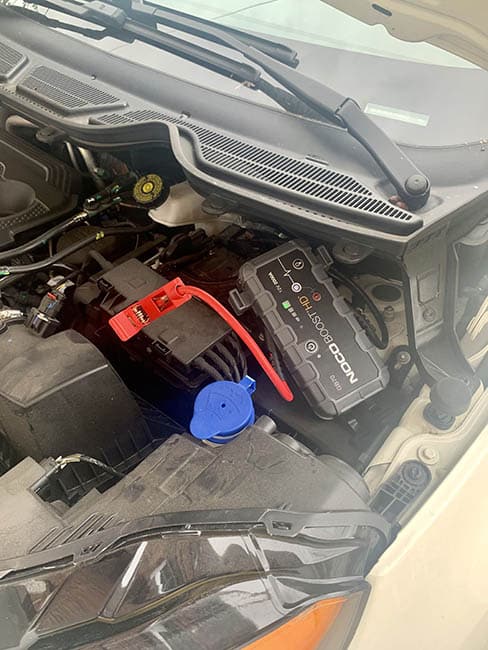
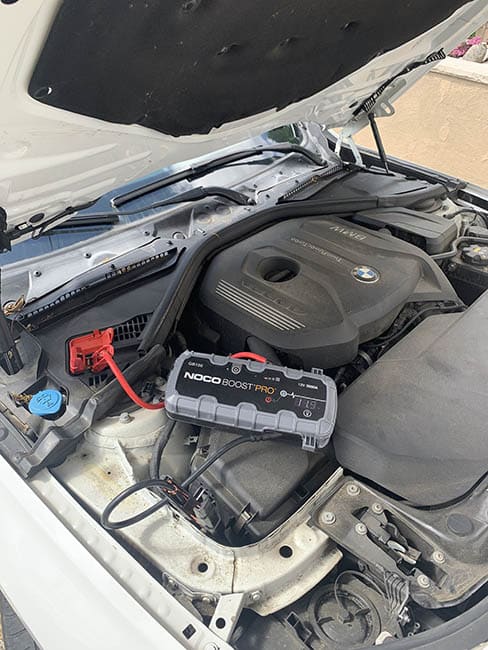
Give us a call and we will be there to assist your roadside emergency needs.
Let us know what you need
- Ansara P.
- JaeSaun Newsome
- Karen E.
Check out all our Google Reviews
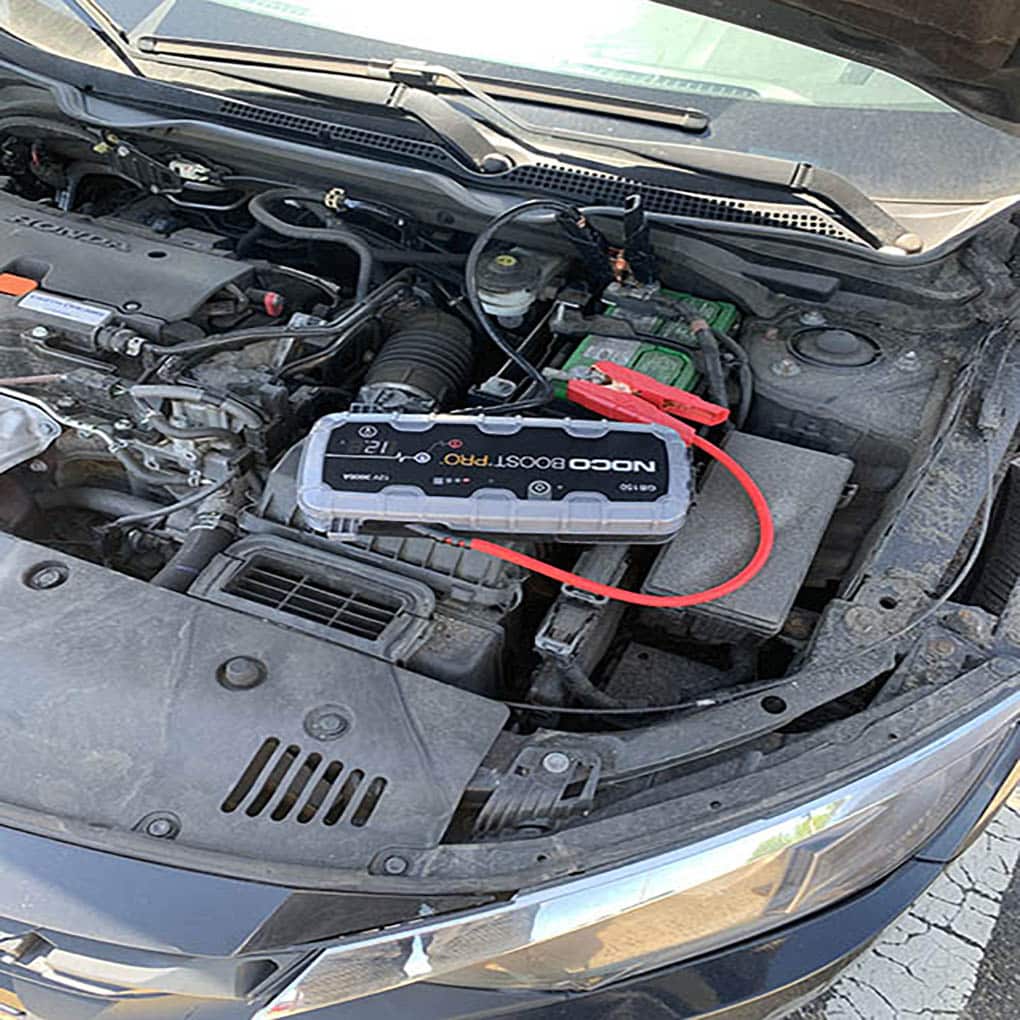
A jump start uses a working battery (from our service vehicle or jumper cables) to supply enough current to your dead battery so your starter motor can crank the engine. Once running, your alternator takes over and recharges the battery while you drive.
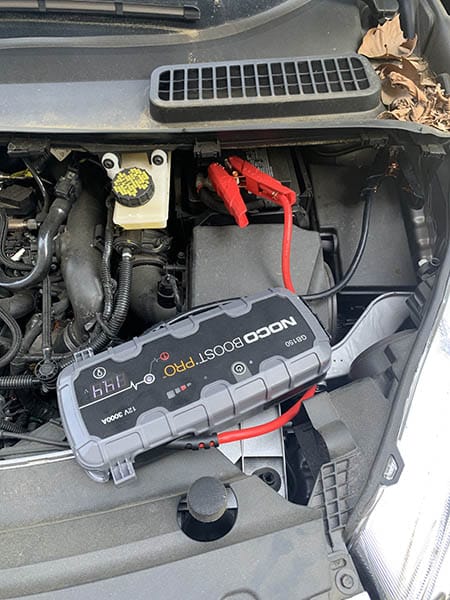
Our technicians use professional-grade lithium jump starters capable of delivering 2,000+ peak amps — far more reliable than a standard set of cables. After the jump, we perform a free battery load test using a conductance tester to check your battery’s actual health. A battery that reads below 40% health should be replaced to avoid being stranded again.
Signs your battery may need replacement instead of just a jump:
When performed correctly, a jump start is safe for your vehicle’s electrical system. However, improper technique — like reversing polarity or using an undersized power source — can damage sensitive electronics, blow fuses, or harm the ECU.
That’s why using a professional service matters. Our technicians follow the correct sequence every time: connect positive to positive on the dead battery, positive to positive on the donor, negative to donor, then negative to an unpainted metal ground on the dead vehicle (never directly to the dead battery terminal). This prevents voltage spikes that can harm modern vehicle electronics.
Modern vehicles with start-stop systems, regenerative braking, or AGM batteries have specific jump start requirements. If your vehicle has an AGM or EFB battery, our technicians know the correct procedure and will avoid procedures that can damage these battery types.
Our average arrival time across New Jersey is 15–35 minutes. Response times vary slightly based on your location and current traffic conditions, but we prioritize all roadside calls and dispatch the nearest available technician immediately.
The jump start procedure itself typically takes 10–15 minutes from arrival to your engine running. If you also need a battery load test (included free), add another 5 minutes. If a battery replacement is needed, our technicians carry common battery sizes and can usually complete the swap in 20–30 minutes on-site.
Total time from your call to being back on the road: typically 30–60 minutes.
It depends on why your battery died. A jump start is a permanent fix if your battery died due to leaving your lights on or a one-time drain — once the alternator recharges the battery during a 20–30 minute drive, you’re good to go.
However, a jump start is only a temporary solution if your battery is old, sulfated, or failing. In that case, it will lose charge again within hours or days. The same is true if your alternator is failing — even a new battery will go dead if the alternator isn’t recharging it.
Our free battery load test tells you which situation you’re in. If your battery passes the test after the jump start, you’re fine. If it fails, we’ll give you an honest recommendation and can replace it on the spot before you get stranded again.
After a jump start, drive your vehicle continuously for at least 20–30 minutes to allow the alternator to recharge the battery. Avoid short trips immediately after — stopping and restarting within a few minutes can cause the battery to die again before it’s had enough charge.
For best results, drive on the highway rather than in stop-and-go traffic. Highway driving keeps the alternator spinning at a consistent RPM, recharging the battery faster.
If your battery warning light stays on after driving, or the vehicle feels sluggish to start again within a few days, your battery likely needs to be replaced or your alternator may be underperforming. Call us and we’ll test both.
We can jump start virtually any vehicle with a 12V or 24V battery system, including:
Note: Hybrid and electric vehicles have a 12V auxiliary battery that can be jump-started normally (it powers the electronics, not the drive motor). However, the high-voltage traction battery cannot be jump-started and requires dealer service if discharged.
Vehicles with AGM or EFB batteries — common in newer European cars and start-stop systems — require a jump starter rated for AGM. Our equipment handles these correctly.

Check out all our emergency roadside assistance